Here in NYC and MUNY we're so excited that Alice is now into the semi-finals of America's Got Talent. We'll be watching and listening August 31st. Alice has sent us word from LA:
Hi My People,
Yes it's time to make the donuts...
You all know that I will do my best, and I know you will too.
I'm counting on you all. We have to do this together.
Alice came on first! She sang "If I Don't Have You" (Whitney Houston version) which is a powerful song and technically quite demanding, consideringshe was the first one to perform, WOW what a way to start the show. Her ability to peg those notes with emotion and clarity rang out rich and clear. Way to go Alice!
Update on 2010-09-03 02:54 by NYC Subway Girl
Alice's run at AGT is now at an end, but it's not the end for her amazing talent, no way. Of course there's disappointment but as I wrote to Aice in an email "I am so proud of you and your amazing performances on AGT. This will be a spring board to so many other things. I'm sure you're disappointed not to move on, but you inspired so many people with your amazing voice and character."
I'd love to get Alice to record and Inspiration for this website. Will keep you posted. Alice let me know if you're game!
Update on 2010-10-29 18:59 by NYC Subway Girl
Performing at Union SQ today and who walked by but Alice, looking fabulous! She gave me a huge heartfelt hug and as she travelled on her way like so many commuters do, she stopped for another moment and said to me "be true to who you are Cathy, that's all that matters."
Perfectly said, and at that moment all I wanted to do was stop and sit down with Alice and talk about her experience under the bright lights above ground in TV land and listen to her deepest thoughts. But she was gone down the stairs to the next train, and I was on to another song........
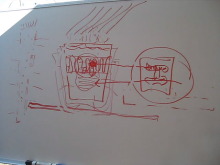
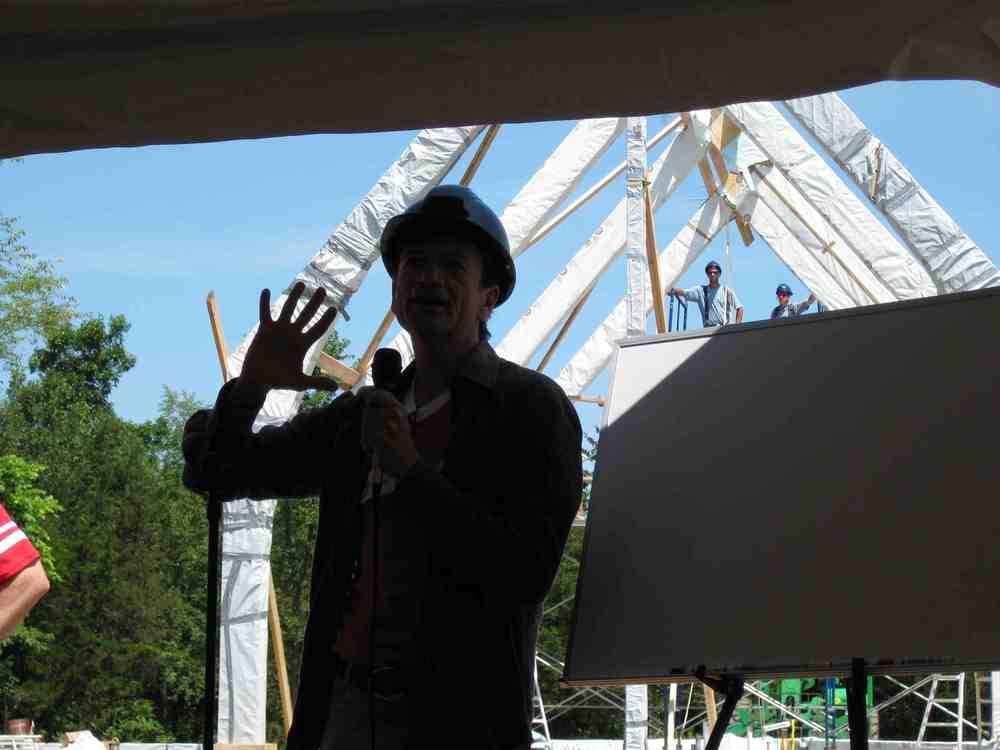
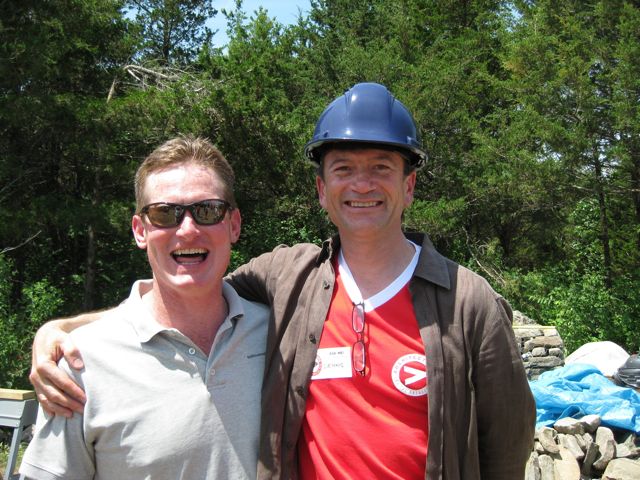
What is a passive house? It's a house that is designed to use 90% less heatingenergy, 17% total energy of conventional 3 bedroom house without the use of photovoltaic, geothermal or wind turbines. I was invited to the 'barn raising' and experienced the amazing moment of joy working together to pull up the trusses. To listen to Dennis Wedlick architect describe in lay men's terms how it works was like watching a master class, yet it was so simple. Using a drawing of a coffee cup he asked, "how can we design this cup to continuously not only have hot, but fresh coffee all day long?" Using the same principles of keeping that coffee hot and fresh, that's how he designed a house to stay an even temperature year long and with constant fresh air. How? Proper house siting, insulation, and a 'magic box' (air ventilator) that circulates the air whether warm or cool.
I like to shine the spotlight on people who I feel balance a life of creativity with integrity and who strive to make this planet more sustainable. Dennis Wedlick architect and Bill Stratton builder are doing just that.
What do Broadway, Climate Change and the White House have to do with each other? This months Guest Blogger comes from Allen Hershkowitz, NRDC Senior Scientist, NYC and throughout the world. I thought I'd also share it here on my sustainability blog. Allen writes so clearly, carefully and passionately about how Broadway has corrected inappropriate policies that once affected negatively but now help to reduce the impact of Climate Change.
Steps forward that's all we can ask for and try to accomplish. Kudos to BGA for making a difference. Their work teaches others through observation and then action.
August 2010: This month I feature a blog by Allen Hershkowitz, NRDC Senior Scientist, NYC and throughout the world writing about the Broadway Green Alliance, Allen presents some amazing facts worth consideration.
By Allen Hershkowitz, Senior Scientist, NYC and throughout the world
President Obama and the First Lady celebrated Broadway last night in the East Room of the White House and two co-founders of the Broadway Green Alliance, Susan Sampliner, Company Manager of Wicked, and I, were invited. (http://www.broadwaygreen.com/) Our attendance, as environmentalists working with Broadway's theater owners and influential decision makers to help reduce the environmental impacts of The Great White Way, was a gentle but meaningful recognition by the White House that every sector in our society, even entertainment, has to do something about climate change and other ecological crises.
Every day, more than ninety million tons of greenhouses gases are emitted into the atmosphere, and each day more are emitted than the day preceding. At the same time, we are losing an acre of tropical forest every second, and have been for twenty years. We lose an acre of wetlands every minute, and forests are being converted into toilet paper. Our oceans are at risk, saturated with oil, acidification, and plastic debris, and biodiversity loss is occurring at a rate and scale that is unprecedented in human history.
Obviously, these pressures are not the result of only one single bad actor. They are the result of billions of ecologically ignorant production and consumption decisions. All of us, all industries, and all consumers contribute.
Hence, while some members of the Senate are willing to regulate carbon emissions only from power plants, and many other Senators are not even willing to regulate carbon at all, we must find innovative approaches to mobilize our economy and our culture to respond to the planetary emergency we face. Indeed, the fact is that even if a law is enacted that regulates carbon at power plants, we still need to move all other sectors in our society away from fossil fuels and towards other ecologically intelligent practices.
Broadway theaters are small contributors to the climate crisis. But the willingness of theater operators, and touring productions, to collaborate with NRDC and adjust their practices to reduce their carbon footprint and impacts on biodiversity sends an environmentally informative message to some of the more than forty million people who visit Broadway shows in New York City and around the country each year.
Broadway’s visibility is global. People from all over the world come to see Broadway shows, and if they walk away learning that Broadway has gone green due to the outreach efforts of the Broadway Green Alliance, they might be reminded that addressing the global ecological crisis is everyone’s responsibility. And with so many people around the world disappointed by the lack of carbon regulations in the United States, their tourist visit to Broadway, or one of Broadway's 200 touring productions, helps them learn that there are meaningful non-governmental initiatives taking place in the United States to address climate change and other ecological pressures.
Broadway’s cultural influence is also social and political, which is why Broadway’s embrace of environmentalism is important. As the President said last night, Broadway shows are more than entertainment, they have been “shaping our opinions about race and religion, death and disease, power and politics.” And now Broadway, through its work with the Broadway Green Alliance and NRDC, is helping to shape opinions about environmentalism too.
Besides public education and the education of the many supply chain vendors servicing Broadway’s theaters, some of the accomplishments that the Broadway Green Alliance has instigated in the past two years are tangibly meaningful, and include the following:
All 40 Broadway theaters have converted marquee and roof signs to LEDs, CFLs, or cold cathodes (as of April 2010). These bulbs typically use 20% the energy of traditional marquee bulbs. Upper theater signs have also been replaced, using bulbs that consume only 25% of energy used previously. Incandescent lights are also being replaced with CFLs in dressing rooms.
Energy efficient lighting upgrades have been installed at 90% of touring venues.
31 of 39 theatres have instituted comprehensive recycling programs both front of house and backstage, and many productions are incorporating significant paper use reductions backstage.
84% of all scenery from shows that have closed since January 2009 was recycled or reused.
Through a sponsorship with LG, all forty Broadway theaters are replacing older washer/dryers with energy and water efficient (Energy Star rated) machines. The energy savings achieved by making this switch is enough to power all Broadway theatre marquees for more than 3 months.
Productions are switching to rechargeable batteries and greener cleaning products.
Many productions are replacing the use of bottled water with water filtration systems and reusable bottles.
Roundabout Theatre Company’s Henry Miller’s Theatre and Disney’s New Amsterdam Theatre both have installed waterless urinals, and signs above their waterless and low-flow devices educate patrons about this water conserving technology that they may want to use in their own homes or businesses.
As part of the BGA’s “Touring Green” program, touring shows have offset over 4,000 tons of carbon emissions associated with the transport of their equipment by investing in wind power and other renewable energy projects offered through program partner Native Energy.
Almost all productions now running on Broadway have selected a “Green Captain”, on site to educate performers, crew, and management alike about the constant need to reduce ecological impacts and help implement more sustainable practices during productions.
Besides the political, economic and technical barriers to sustainability, there are also cultural barriers to sustainability. By engaging our nation’s cultural elite in behalf of ecological progress, meaningful steps are advanced which make addressing our climate crisis and other ecological problems more culturally accepted. We must end the cultural assumption that it is OK to destabilize the chemical stability of our atmosphere, or blow up forested mountains in Appalachia to acquire coal for energy. Collaborating with cultural elites helps us get that message out.
Last night, the movers and shakers of Broadway were in attendance, and they noticed the White House’s embrace of the Broadway Green Alliance. Robert Wankel of the Shubert Organization was in attendance, as were Nick Scandalios of the Nederlander Organization and Paul Libin of Jujamcyn. Collectively, these people manage about eighty percent of all Broadway theaters. Millions of people see their shows each year, and all of their organizations work with the Broadway Green Alliance, as does Broadway League Executive Director Charlotte St. Martin, who was also in attendance last night. Nor did it hurt to have Rocco Landesman, Chairman of the National Endowment for the Arts, learn of Broadway’s interest in greening, and last night provided that opportunity as well.
Hopefully, our government will soon adopt a comprehensive law limiting climate changing pollutants. Science certainly dictates that that should be done. But the slow pace of legislative reform and the urgent ecological needs of the planet don’t work in tandem. Consequently, market based initiatives are called for, whether or not government properly accepts its responsibilities. By using the visibility of Broadway and other culture influencing sectors to leverage our message to the industrial supply chain, NRDC is working hard to move our economy and public sentiment towards ecological sanity, whether government acts or not.
I am a Senior Scientist at NRDC, specializing in issues related to sustainable development, supply chain management, industrial ecology, the paper industry, health risks, solid waste management, recycling, medical wastes, and sludge. I coordinate some of the world’s most prominent institutional greening initiatives, including the Academy Awards telecast, the GRAMMY Awards, the “Broadway Goes Green” initiative, and the greening of Major League Baseball, the National Basketball Association, and the USTA. I’ve served on the DuPont Corporation’s Bio-Based Fuels Life Cycle Assessment Advisory Board, the National Research Council Committee on the Health Effects of Waste Incineration and the EPA's Science Advisory Board Subcommittee on Sludge Incineration, as well as the Agency for Toxic Substances and Disease Registry's Peer Review Panel for it's Report to Congress on the Health Implications of Medical Waste. There’s more, but too much to list here.
"What Inspires me is coming and performing to people like you, because I find that performing in public spaces is one of the most liberating experiences of performance. Talk to any subway perfomer and they'll probably tell you the same thing, how wonderful it is to do what we do- we love it!" NYC Subway Girl
Through My Eyes words/music C. Grier Singerfish Publishing SESAC
Since the first question most people ask is "Why perform in the subway?" I thought, I'd share more about why I perform in public spaces and the program I work under:
Music Under New York is a program within Arts For Transit. Tim Higginbotham of MUNY has been a tireless organizer and passionate street musician supporter. He and Scott's amazing work keeps this program alive, exciting and thriving. If you have ever been touched by this program leave a comment below, or consider writing a letter to the MTA expressing your support as a commuter for this essential program. As a recent commuter said while passing me "live music for the price of a swipe!"
Music Under New York works within theArts For Transit which commissions the rich and beautiful mosaics including other art installations found throughout the city. Kudos to Sandra Bloodworth director Arts For Transit, assistant director Amy Haussmann and Lydia Bradshaw Manager, MTA Arts for Transit and Music Under New York.
I joined the roster after auditioning for the program in May of 1999. Every two weeks I select from various locations where I would like to perform.
I have many favorite spots and you might find me at Grand Central Station Shuttle, Times Square, Union Square, Astor Place, LIRR and 34th street and a new favorite the Staten Island ferry terminal.
I participate in “Music Under New York", because the connection is a very different experience than performing on a stage. Not to mention that it's a deconstructed approach to the music industry. Underground, commuters and I are collaborators in a musical, rhythmic, spontaneous soundtrack. To many people, a street performer is a struggling artist, for me it's a moment without struggle. I bask in the void of promoters rules, of complicated and heavy equipment, of the music industry's opinion, and a singer song writer's freedom to do what I love to do. I applaud the MTA's support of this program.
If you're looking where to find me, I always post my subway performances on my gig page- Gigs link at the top of this page.
Here's an older blog I wrote for a student asking great questions about subway performing.
The MTA also presents the wonderful program Poetry In MotionI love seeing the poetry in the subway cars, lyrical, thought provoking, funny. Important.
I met Cooper Moore on the subway platform at 49th st station. He made this harp from recycled materials: a hoe handle, a piece of wood from his mothers old sofa, a part from another instrument, some other wood scraps and some fishing line.
That's what I call sustainable and inspirational.
hotter than Hades 34th st platform. Need to get to ferry terminal for 2:30 ferry
Service cuts no more W line need to rely on R or switch to 5 at 14th st for Bowling Green. Another train comes it's an N. My back is dripping sweat, very hot. Door stays open longer than usual so I hop in. It's cooler, I can decide at 14th st if I want to switch to an R or go upstairs lugging my stuff to the 5. Subway musicians spend a lot of mental energy figuring out where escalators and elevators are. Unfortunately we don't know when they are running. Life with the subway is a series of decisions to move closer to where we need to go. Rats, just realized the N is local meaning I could miss the R connection, so I look out the window to see if an R speeds by at 23rd st. So far so good. Hedge my bet at 14th st no matter what. At least it's cool.
Earlier I walked past the MUNY spot at 34th st a solo pan flute player played a mournful sound fit in with the oppressive heat.
Today is my last booking for July and August but quite a commute to be able to perform in an air conditioned terminal on Staten Island. Off at 14th st sounds like Natalia (Saw Lady) is playing. Wow it's too hot for this spot. We ARE a crazy bunch.
Watching her audition clip on Youtube aired June 15 2010 as of today July 20th, it has been viewed 717,617 times. How's that for an audience. I love one comment left under the clip "If I heard a voice like that on the subway everyday, I'm not buyin' a car." Well that's one way to help reduce our addiction to oil. I can see the headlines now, "Subway Singer Solves Energy Crisis."
Tonight is a very exciting night on TV for anyone who has heard Alice Tan Ridley perform in the subway. With a unanimous vote from America's Got Talent judges last April, she now moves on to the audience vote phase of the program. Of course all of us in the Music Under NY program which she has been involved with for the past 20 years, are beyond thrilled for her. She has shared with us her belief that what we do underground "keep hopes alive and dreamers dreaming." You bet.
Watching her audition (see the clip below) I couldn't help but remark that when she walked onto the stage and Sharon Osbourne asked Alice "What do you do for a living?" and Alice said "I'm a singer." The audience gave some modest applause. When Sharon further asked, "Where do you usually work?" and Alice replied "In the subway." There was a strange silence, no one knew how to react to that information until Alice opened her mouth and not even 3 notes into singing the audience went wild. Hard to believe for many people that someone that sings in the subway could ever have this kind of talent. Guess that's what you get for under promising and over delivering. From that point on, everyone heard what we know here in NYC. Alice Tan Ridely has an amazing voice, a poise and wit that goes way beyond what ever happens on America's Got Talent show tonight.
Alice's auditioned with the Etta James song "At Last," written by Mack Gordon and Harry Warren, which ends with the soulful heart filled line "you are mine at last." Fitting, very fitting, after tonight millions of people will know why.
Watching this clip on Youtube from her audition aired June 15 2010, as of today July 20th, it has been viewed 717,617 times. How's that for an audience. I love one comment left under the clip "If I heard a voice like that on the subway everyday, I'm not buyin' a car." Well that's one way to help reduce our addiction to oil. I can see the headlines now, "Subway Singer Solves Energy Crisis."
Well the news is great, Alice has made it into the semi-finals of America's Got Talent. Congrats to Alice, can't wait to watch the rest of her wonderful ride!
Update
on 2010-09-03 02:55 by NYC Subway Girl
Alice's run at AGT is now at an end, but it's not the end for her amazing talent, no way. Of course there's disappointment but as I wrote to Aice in an email "I am so proud of you and your amazing performances on AGT. This will be a spring board to so many other things. I'm sure you're disappointed not to move on, but you inspired so many people with your amazing voice and character."
I'd love to get Alice to record and Inspiration for this website. Will keep you posted. Alice let me know if you're game!
If you don't know, I have a section on this site for guest bloggers. This week I am featuring an amazing and moving story by Elizabeth Hess about the rescue of Bobby a NYC Carriage Horse, now happily roaming around a grassy pasture in upstate NY instead of being someones dinner. No kidding.....
When people ask if I'm playing in the subway I say. "if it's too hot for the carriage horses to work, NYC Subway Girl listens." So I love to be able to share this story about the fate of one lucky horse.
Thanks to Elizabeth Hess for her tireless work in saving animals and writing so eloquently about them. And to Rural Intelligence who first printed the story.
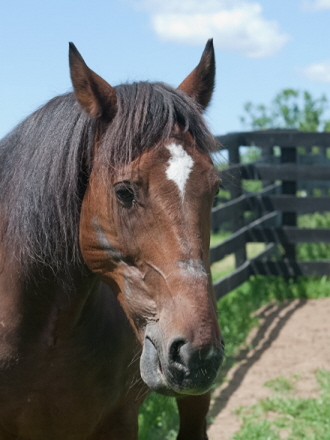
I visited Equine Advocates in Chatham, NY this week and had an amazing tour from none other than director and visionary Susan Wagner. I met Bobby the rescued carriage horse, now living in horse heaven, he looks fantastic and happy. On November 6th, Equine Advocates is having an amazing benefit and dance performance with horses, if you're in the area should not be missed. Actress Joan Allen is hosting, follow this link to learn more.
July 2010: If you don't know, I have a section on this site for guest bloggers. This week I am featuring an amazing and moving story by Elizabeth Hess about the rescue of Bobby a NYC Carriage Horse, now happily roaming around a grassy pasture in upstate NY instead of being someones dinner. No kidding.....
When people ask if I'm playing in the subway I say. "if it's too hot for the carriage horses to work, NYC Subway Girl listens." So I love to be able to share this story about the fate of one lucky horse.
Thanks to Elizabeth Hess for her tireless work in saving animals and writing so eloquently about them. And to Rural Intelligence who first printed the story.
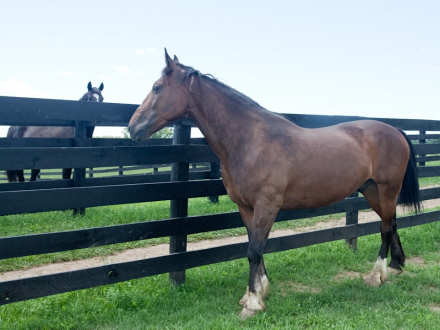
Passages: Horse Heaven, Escaping the Plate Last week, the staff at Equine Advocates, a manicured, 140 acre horse sanctuary, gathered at the main barn to welcome a new arrival. “Getting this horse is a real coup,” Susan Wagner, president of Equine Advocates, told me as we waited in the hot sun for the horse. “48 hours later and he would have been chopped meat.” Americans don’t eat horses. However, we send them to slaughter and export the results for consumption without moral hesitation. Advocates like Wagner publicize this miserable reality for horses and save as many of them as possible. Most of the 80 residents at her sanctuary, once slaughter bound, detoured to safety. This week, a group of rescuers worked together to buy one particular horse from what Wagner calls “a kill pen” at the New Holland Sales Stable, in Lancaster County, Pennsylvania. New Holland is synonymous with slaughter. Bobby (AKA Billy # 2783) is an 18 year old, lame, worm-ridden, New York City carriage horse with bad teeth and a nasal drip. “Wait until you see him,” Wagner says. “He’s adorable.” Wagner loves all horses, but carriage horses, from her perspective, are working class heroes. For years, she has supported legislation to ban New York’s controversial carriage trade, where a few hundred horses pound the pavement, pull heavy loads, and are monitored by the American Society for the Prevention of Cruelty to Animals. “It’s not only the traffic accidents,” explains Wagner. “It’s the horrible conditions in the stables and the physical wear and tear on the horses. They never get to run, walk on grass, or socialize with other horses.” But getting custody of a carriage horse, even an unwanted one, is virtually impossible. According to Elizabeth Forel, the founder and president of the Coalition to Ban Horse-Drawn Carriages, New York City drivers sell off about 70 horses each year, one third of the stock. “But it’s difficult to learn where they go,” explains Forel. Their owners are not about to give their horses to the enemy—those who would like to shut the industry down.
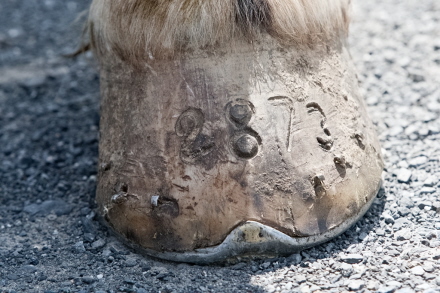
When the van pulls into Equine Advocates, the staff breaks into applause. Minutes later, Wagner leads a bay gelding down a ramp, and he walks gingerly into the warm light of a spectacular Columbia County morning. Bobby moves slowly, doing what he is told, which is probably what he’s been doing for most of his life. As soon as he stops for the crowd to approach, Bobby lifts his crusty nostrils into the air to catch the wafting scent of hay, grass, other horses. Paradise. I walk up and give him a pat on his wide neck, which is covered with nicks, maybe bites or scrapes from his experience in the pen at New Holland. The skin on his nose is scarred, bald from years of wearing heavy equipment. “I can’t wait to get the halter off him,” Wagner tells me as she leads him to a nearby paddock where she will set him free. How did Wagner get Bobby? Every carriage horse gets a 4-digit number, issued by the Department of Health, etched into his or her left front hoof. Ironically, Bobby’s number, 2873, saved his life. According to Wagner, these numbers are usually sanded off prior to sale, erasing the horse’s identity as a NYC carriage horse. “The industry doesn’t want the public to know that these horses are worn out and subsequently sold off to buyers for slaughter,” she explains. “It just might take the romance out of a midnight trot around Central Park.”
Rescuing Bobby required team work. The first rescuer, a woman at New Holland, spotted his hoof number, took a photo, and put out an Internet alert. Luckily, the alert reached Elizabeth Forel, a tireless adversary against the carriage trade, who has been getting FOIA records from the DOH on carriage horses for years. She looked up the horse’s number, identified him as a resident of West Side Livery Stable, where the carriage horses live, and took it upon herself to rescue him from death. Forel raised the funds to purchase Bobby (from Friends of Animals) and asked Equine Advocates to offer him life-time sanctuary. Within 24 hours, a check for $800 bought Bobby’s freedom and Wagner sent a hauler to bring him home.
Wagner walks Bobby over to a small catch area where he has room to run, a covered shed filled with soft bedding and fresh water. Then she removes his halter and gives him a pat on the nose. For a minute, the naked horse doesn’t move. A sleek, black thoroughbred named Clive, rescued from inside a defunct motel near Albany, runs over to check out the new guy. The horses can’t touch each other; they are about 30 feet apart. Clive is eager for access to the new horse, but Bobby shows restraint, patience. Hard work and no play seem to have turned him into a sweet, bomb-proof fellow. After a few minutes, Bobby lowers his large head and grabs a mouthful of grass, flicks his tail back and forth, and chews. Only one mouthful before he gingerly falls to his knees, rolls onto his back, and rocks back and forth, scratching his hide and kicking his legs in the air with palpable horse-joy. He eventually gets up and walks over to his trough for a long, cool drink of water. “I can’t wait to groom him,” Wagner says. “He’s going to love that.” —Elizabeth Hess
Elizabeth Hess, the author of “Nim Chimpsky: The Chimp Who Would be Human” lives in Spencertown, NY and is a founder/director of Art For Animals "transforming creativity into compassion for animals." She writes here about Equine Advocates, an animal rescue facility in Chatham, NY.
This summer if you're serious about doing your part to reduce energy consumption due to the horrific oil spew in the Gulf, consider how much our energy use produces heat. We heat things up artificially and then we need to cool them down artificially. Sounds crazy but true. A life lived with concern for sustainability starts with reason. Reducing waste and energy is a reasonable place to start.
Here are NYC Subway Girl's top ten things you can do to keep things cooler AND reduce energy consumption this summer:
1) Turn off lights when not in use.
2) Do you know how much heat comes off incandescent lighting? One solution is to switch to LED or CFC compact fluorescent bulbs (Kudos if you've already switched). A quick solution is to pay closer attention to #1 above.
3) Turn cooling units to realistic temperatures. Just because you can, don't cool to need to wear a parka.
4) Install programmable thermostats. They come cheap and easy to program, set for moderate temperatures when away or asleep. Portable A/C units come with programmable features too-upgrade it's worth it which leads me to #5.
5) replace older model refrigerators, A/C units and other small appliances. If you're reading this you're on a computer. Imagine if you were still using a computer from 2000?! Why hold onto your antiquated energy eating monsters just because "they're still humming" That hum is the sound of heating up your room, a huge energy and money waste. Remember anything that has to cool puts out heat. (ever stand near any one of these units you'll know what I mean). Energy Star is a must, for A/C units look for ratings above a #9, #10+ is best. Refrigerators look at the listed annual cost of electricity posted inside the unit.
6) Close refrigerator door. Don't poke around with the door wide open for longer than it takes to remove something. The unit will have to re-cool everything and the motors will heat up. And keep the temperature reasonable, it's fun I guess, but ice-cream isn't supposed to be put in a microwave (wasting more energy in the process).
7) Do not idle car while sitting in it, unless it's 105 degrees outside and your grandmother or elderly pet is with you forget about it. The heat that is produced is excessive and the harmful emissions are not worth it.
8) Unplug chargers and computers when not in use, they really heat up a lot and waste energy.
9) Do not use a dryer for your clothes. Hot, hot, and hotter. Especially in summer, clothes dry quickly on a line, hanging over a shower curtain rod, or be cool and purchase a drying rack.
10) Turn off water when brushing teeth, soaping dishes, even washing your body in the shower. Water needs pumps, pumps use energy. Hot water needs to be heated. So, be mindful of excess water use. Replacing older model dishwashers and washing machines reduce water use by as much as 50%.
Update
on 2010-07-15 20:29 by NYC Subway Girl
How to dispose of all those old electronics you've collected known as e-waste?
It's important to recycle all appliances. Most states and local communities have designated e-waste drop off days easily searchable online. Here's some info for New York Before discarding appliances containing CFC gas or freon (such as refrigerators, freezers, air conditioners, or dehumidifiers), you must schedule an appointment to place the item at the curb for CFC recovery. You can make an appointment on the Sanitation website or call 311. For safety reasons, the law requires doors to be removed from refrigerators and freezers before placing at the curb.
I found Green Up USA while trying to learn more about e-waste. Green Up USA Inc. is a non-profit, electronics recycling organization reaching out to organizations and communities to heighten environmental awareness through recycling and disposal fundraising events to support charities.